








































































Are Salsa and Bachata Sexist? Rethinking Gender, Culture, and Power in Latin Dance
The claim that Latin dances such as salsa and bachata are inherently sexist is one that surfaces frequently in contemporary discussions, particularly among those encountering these dance forms from outside their cultural context. At first glance, this perception may appear understandable: partner dancing traditions often involve a leader and a follower, sensual movement, and historically gendered roles. However, a closer examination reveals that such interpretations are often rooted in cultural misunderstanding rather than in the intrinsic nature of the dances themselves.
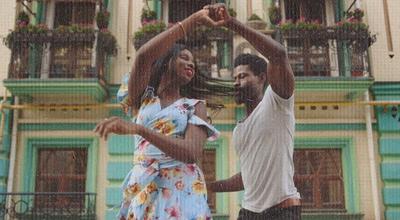
To understand why Latin dances are sometimes perceived as sexist, it is necessary to examine both their structure and the way they are viewed through external cultural frameworks. In many forms of salsa, including Cuban casino, one partner traditionally leads while the other follows. To an untrained observer, this dynamic may resemble a hierarchical relationship in which one individual directs and the other complies. Yet within the practice of social dance, this interpretation fails to capture the embodied reality of the interaction. Leading in salsa is not an act of domination but a form of non-verbal communication, while following requires active interpretation, responsiveness, and creative agency. Rather than reinforcing passivity, the follower plays a crucial role in shaping the dance as a shared, co-constructed experience.
Another source of misunderstanding lies in the expressive nature of these dances. Salsa, bachata, timba, and rumba all emphasize musicality, rhythm, and bodily expression. For observers unfamiliar with Afro-Caribbean movement traditions, the use of the hips, torso, and close partner connection may be interpreted as overtly sexual or even objectifying. However, within their cultural context, these movements function as forms of musical interpretation and embodied storytelling rather than as performances of sexuality. The tendency to sexualise these dances often reflects the viewer’s own cultural lens rather than the intention of the dancers themselves.
Crucially, the narrative that frames Latin dance as male-dominated overlooks the foundational role that women have played in shaping salsa as both a musical and cultural form. Long before salsa was formalised as a genre, women were already central to its development. In 1930s Havana, all-female ensembles such as Orquesta Anacaona demonstrated that women could lead and perform complex son-based repertoires on major stages. Artists like Graciela Pérez contributed significantly to the development of Afro-Cuban jazz, a musical language that later informed the evolution of salsa. Similarly, Myrta Silva not only fronted major orchestras but also shaped the repertoire through her work as a composer and performer.
Perhaps the most globally recognised figure in this history is Celia Cruz, whose career transformed salsa into an international phenomenon. Far from occupying a marginal role, she became a defining voice of the genre, challenging gendered limitations within a predominantly male industry. Her artistic presence, alongside performers such as La Lupe and later La India, expanded not only the sonic boundaries of salsa but also the possibilities of female performance, stagecraft, and leadership. Contemporary artists like Aymée Nuviola continue this lineage, demonstrating the enduring influence of women within the genre.
To suggest that salsa is inherently sexist, therefore, requires overlooking the extent to which women have actively authored its development. They have not merely participated in salsa culture; they have composed, performed, led, and redefined it across generations. The clarity of phrasing, the call-and-response structures, and the theatrical intensity often associated with salsa performance are inseparable from these contributions.
This is not to suggest that all experiences within dance communities are free from issues of power or inequality. As in any social environment, instances of inappropriate behaviour, disregard for boundaries, or misuse of the leader–follower dynamic do occur. However, these should be understood as social problems rather than as inherent qualities of the dance forms themselves. In contemporary dance communities, there is an increasing emphasis on consent, mutual respect, and the decoupling of dance roles from gender identity. Many spaces actively encourage dancers to explore both leading and following, thereby challenging traditional binaries.
Ultimately, the perception of Latin dance as sexist reveals more about the frameworks through which it is interpreted than about the dances themselves. When approached with cultural awareness and embodied understanding, salsa and related forms emerge not as systems of dominance but as practices of dialogue, connection, and shared creativity. They are spaces in which rhythm becomes a medium for communication, and where identity is expressed through movement rather than constrained by it.
While it is important to challenge the idea that Latin dances are inherently sexist, it would be equally reductive to ignore the structural and historical dynamics that have shaped them. Salsa, like many social dances, developed within cultural contexts where gender roles were clearly defined, and these patterns can still be visible in contemporary dance spaces.
In some cases, the leader–follower framework may reinforce traditional expectations, particularly when roles are assumed rather than consciously chosen. Additionally, certain dance environments may fail to adequately address issues such as consent, boundaries, or inclusion, which can lead to experiences that feel uncomfortable or exclusionary.
Recognising these limitations does not diminish the value of the dance itself. Rather, it allows for a more honest understanding of how salsa functions as both a cultural practice and a social space—one that is continuously evolving. It is precisely through this awareness that dancers and communities are able to challenge outdated norms and create more inclusive and respectful environments.