









Timba vs Salsa: What’s the Difference?
If you’ve ever stepped into a Latin dance club, chances are you’ve heard both salsa and timba—sometimes without realizing they’re not the same thing.
To many listeners, timba just sounds like “Cuban salsa.” But for dancers, musicians, and Cuban music lovers, timba is its own world: more aggressive, more experimental, more rhythm-heavy, and deeply rooted in Afro-Cuban culture.
So what’s the real difference between timba and salsa? Let’s break it down.
What Is Salsa?
Salsa is a broad genre of Latin dance music that developed mainly in New York during the 1960s and 1970s. It was inspired by Cuban son, mambo, jazz, Puerto Rican rhythms, and Afro-Cuban traditions.
Classic salsa is known for:
- A strong, driving clave rhythm
- Powerful brass sections and piano montunos
- Rich percussion featuring congas, bongos, and timbales
- Melodic arrangements and energetic call-and-response vocals
Artists like Celia Cruz, Héctor Lavoe, and Tito Puente helped make salsa global. Because it is often smoother and more structured than timba, it remains highly accessible for both dancers and casual listeners.
What Is Timba?
Timba emerged in Cuba during the late 1980s and early 1990s as a fearless evolution of Cuban son, songo, rumba, jazz, funk, and salsa. Unlike traditional salsa, timba pushes rhythm and groove entirely to the front.
Timba is distinctively:
- Funkier and heavier on the percussion and bass
- More unpredictable and musically aggressive
- Driven by modern instrumentation, including full drum kits, synthesizers, and funk-inspired horn lines
- Defined by sudden "gear changes" and Afro-Cuban folkloric rhythms hidden inside the arrangements
One of the most influential groups in timba history is Los Van Van (founded by Juan Formell), whose rhythmic innovations helped shape the modern sound of Cuban dance music.
Timba vs Salsa: The Main Differences
1. Rhythm & Energy
- Salsa usually follows a predictable, steady musical structure that keeps dancers in a reliable groove.
- Timba constantly shifts intensity. A single song might suddenly drop instruments, change the entire groove, inject funk patterns, or create explosive rhythmic breaks called bloques. This unpredictability is exactly what makes timba so addictive.
2. Afro-Cuban Influence
While both styles share Afro-Cuban roots, timba leans much more heavily into street-level Cuban culture. You will frequently hear direct elements of rumba, folkloric percussion, and Yoruba religious chants woven into the music, giving timba a rawer, more sacredly percussive feel.
3. Instrumentation
- Traditional Salsa: Features a classic lineup of congas, bongos, timbales, piano, bass, brass, and vocals.
- Timba: Upgrades the kit. You'll hear full kick-drum kits, synthesizers, slapping funk bass lines, and complex jazz-inspired arrangements that give it a massive, modern sound.
4. Dance Style
While salsa is commonly danced in straight lines—such as On1, On2, LA, or New York style—timba requires a completely different approach.
What is Timba on the Dance Floor?
At its core, Timba is more than just a genre of music—it is a feeling, a cultural movement, and an intense conversation between the musicians and the dancers. It is a space where Cuban culture blends with modern influences to elevate the energy to a whole new level.
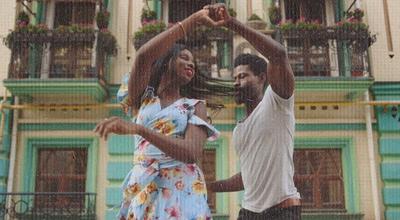
When people talk about "Timba dancing," they are usually referring to Casino (internationally known as Cuban Salsa) danced with a deep, visceral interpretation of Timba music.
Compared to other styles, Timba dancing is:
- Circular & Fluid: Moving in dynamic, rotating patterns rather than rigid lines.
- Playful & Spontaneous: Filled with dialogue, wit, and flirtation between partners.
- Body-Movement Focused: Driven by rich Afro-Cuban isolation, hip action, and shoulder movement.
- Rhythmically Alive: Intimately connected to the sudden breaks, shifts, and complex polyrhythms of the music.
In short: You don't just dance to Timba; you let the music reshape how you move. It is Casino salsa, but with the volume of the Cuban soul turned all the way up.
5. Mood & Culture
- Salsa often feels polished, romantic, elegant, and orchestral.
- Timba feels streetwise, high-octane, rebellious, and deeply Cuban. Musicians often describe timba as music explicitly engineered for physical release and high-intensity movement.
Is Timba Just "Cuban Salsa"?
Short answer: Not exactly.
Some people use “Cuban salsa” as a broad, commercial label for all Cuban dance music, which includes timba. But musically, timba has its own distinct identity, structure, and cultural history.
A simple way to think about it: Salsa is the global Latin dance language. Timba is Cuba’s modern, high-energy evolution of it.
Essential Artists to Explore
Salsa Legends
🎺 Willie Colón
🎤 Héctor Lavoe
🥁 Tito Puente
🎤 Celia Cruz
Timba Essentials
🥁 Los Van Van
🎷 NG La Banda
🎹 La Charanga Habanera
🎤 Manolín "El Médico de la Salsa"
Final Thoughts
Timba and salsa share the same roots, but they speak with entirely different voices. Salsa gave the world a universal Latin dance sound that anyone can step into. Timba took those foundations and injected them with Cuban street energy, Afro-Cuban complexity, funk, jazz, and fearless experimentation.
Neither style is "better" than the other. But once you learn to hear timba’s explosive rhythm changes and feel its unstoppable groove, it changes the way you move forever.